
An Interview with AP Thomson
Oh hello there. As part of our partnership with Fellow Traveller, putting Titanium Court exclusively into the hands of the Pantaloon community ahead of any formal demo or release, we’ve also been allowed access to the brain of its creator, AP Thomson.
Here’s our interview. Enjoy x
Give us your origin story. What were the sequence of events that first brought you into game design, and ultimately led to Titanium Court?
"I've been making games for a long time. I first learned how to make games at a computer camp in northern Virginia. We used Logo Writer and Microworlds, both of which were programs that used the Logo programming language and a visual canvas. The first game I made this way was a breakout clone named "Spaceballs!" (at 6 years old, I was unaware of the Mel Brooks film. "Spaceballs!" just felt like an appropriate title for a breakout clone. Mel never pursued legal action so I have to assume he was chill with it).
Later I spent four years in college studying the computer. There are plenty of non-game-related things to do on the computer that are allegedly worthwhile, so I spent one summer as an intern at a Large Technology Corporation and the experience convinced me that, actually, games might be the only worthwhile thing to do on the computer. So, following my undergraduate studies I shifted course and spent a couple years at the NYU Game Center studying the computer (but for games this time). One timelapse montage of game jams, prototypes, collaborators, and Steam releases later and here we arrive at Titanium Court: Perhaps the MOST worthwhile thing to do on the computer."
Titanium Court is a real melting pot of genres and design ideas. Was there a particular system or theme that led the way here and the rest appeared organically as part of the process? Or was it always a case of everything all at once?
If you look at some of my previous games (in particular Beglitched on Steam (see below) and Swap Sword on the iOS App store), you ~might notice a clear mechanical through-line that's also present in Titanium Court [laughs]. This through-line maybe explains the origins of the central mechanic in TC, which I originally prototyped during a Ludum Dare jam in late 2019.
Beyond this central mechanic, something I think of as key to understanding Titanium Court's structure is that it was built from day one as a side project. When I first started expanding the prototype into a larger game in early 2020, I was already working full-time on another game (the recently released Consume Me! If you haven't played it yet then I recommend you stop reading and immediately purchase multiple copies for yourself, your loved ones, your workplace, your school district, your hairdresser etc). As such, the time I had to work on Titanium Court was very limited: About 40 minutes on a normal workday + weekends and the occasional week when we were taking a break from Consume Me.
So I needed to be able to add things to TC quickly, without spending a ton of time integrating everything. My goal was to be able to spend 40 minutes writing a new scene (or card, or enemy type, or tile), send it off into the game, then forget about it until I saw it show up while playing. I thought of this as "message in a bottle" design and it had a big influence on how I built out the structure of the game. Various randomized pools of objects were set up everywhere, individual objects were annotated with information on how and where they should appear, tiles and cards were designed to work in almost any conceivable context. All this to produce the sweet and savory soup you now see before you. Enjoy!
How did the Shakespearean influences first surface, and how integral to the big picture are those themes?
"My mom is a big Shakespeare fan and took me to see performances from a very early age. Appropriately, the first one I saw was "A Midsummer Night's Dream" when I was probably about 6 or 7 years old. My mom explained the whole plot to me beforehand so I could understand what was going on even if the language was difficult to parse (A good strategy for introducing a kid to Shakespeare, in my opinion). I remember at the time I was kind of surprised by how modern the story felt, even though it was hundreds of years old. I had a similar experience years later when a visiting troupe performed "Twelfth Night" for my high school. The plot felt like it came right out of a shoujo manga and I remember thinking "I can't believe the teachers are letting us watch this. This is SO MANY sex jokes!"
That said, I'd argue that Titanium Court wasn't influenced by Shakespeare so much as it was influenced by faerie fiction at large. Books like "Jonathan Strange and Mr. Norrell" by Susanna Clarke and "Spinning Silver" by Naomi Novik were both big influences on the narrative style and setting of Titanium Court. Related to my answer above about Titanium Court's design, faerie fiction was a natural fit for the game because it allowed me to explore a bunch of weird ideas without having to really justify their place in a larger world. Faeries are very compatible with short vignettes, punchlines, reflecting society through a funhouse mirror, and general abstract nonsense. Faeries are just "like that," y'know?
But, getting back to Shakespeare, the names of certain characters in Titanium Court were taken from "A Midsummer Night's Dream" mostly because they're in the public domain and it's fun to re-imagine old characters in new settings (Shakespeare himself did this with some of these characters. Puck in particular was a pretty common character in folklore prior to Shakespeare)."
I’m always interested in what doesn’t make it into the game as much as what does. Are there any features or ideas on the cutting room floor that didn’t make it into the finished article?
"I spent the first year of Titanium Court development kinda barking up the wrong tree in terms of design. The original idea was that there would be four chapters, each taking place in a different court. Titanium Court itself would be the setting of just the first chapter. Each subsequent chapter would then completely alter the mechanics in pretty radical ways (i.e. real-time battles that can be interrupted, the ability to go inside enemy courts and engage in simultaneous battles on the inside and outside, etc).
As it turns out, these mechanical changes were a bit TOO radical in the sense that they were super unwieldy to implement and a bunch of them weren't very interesting to play in their first iteration. In early 2021 I decided it was time to rescope and focus the project around just chapter 1. That said, a lot of stuff from these other chapters ended up in the game in various forms (which I won't spoil here), but a lot of it did not."

Is there a specific feature or facet of the game you’re particularly proud of that you want to shine a light on?
"Titanium Court plays a lot of pranks on the player that I'm fairly proud of, but I don't want to alert any potential victims so I won't talk about them here. Instead, let me take this opportunity to tell you about my favorite joke in the game. Note: I'm not claiming this is the ~best joke in the game, just that it's my ~favorite.
Basically, the player can inspect any tile in the game to get a tooltip description of it. In the case of tiles on the battlefield, these tooltip descriptions are very practical and tell you stuff like whether the tile is flammable and how quickly units can move across it etc. Everywhere else, these descriptions are essentially just flavor text. Now if the player looks at the description of the chair in the office, the tooltip says "A throne fit for a queen who has business to attend to." Particularly attentive players might eventually realize that this description is identical to the one for the toilet in the Queen's chambers.
That's it! Perhaps the most subtle potty joke ever written! Almost nobody is even going to notice it...until now!!"
What’s interested you in the market recently? Any particularly novel or high concept games you’ve been playing or enamoured by?
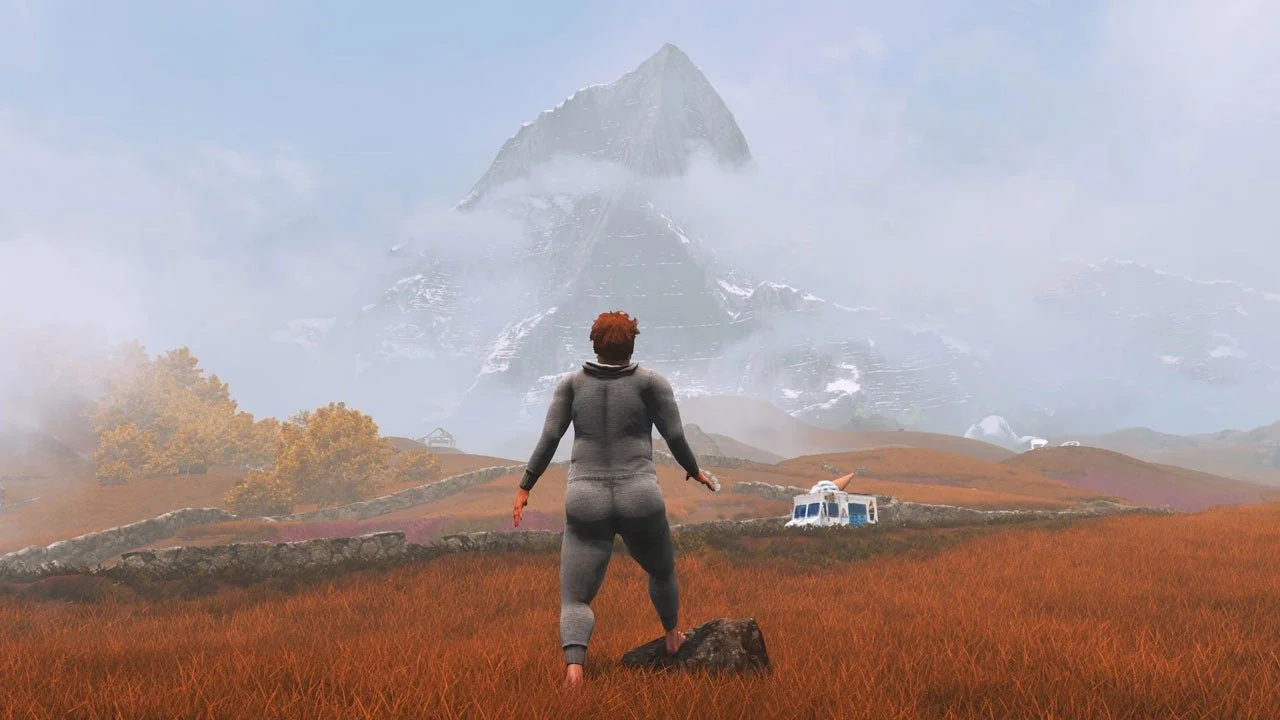
"I just recently finished up Baby Steps which is one of my favorite games from last year. I've personally known the team behind it for a while though so this answer may be tinged with a smidge of ~bias.
I've also been playing Angeline Era which is the latest from Analgesic Productions (previously Anodyne + Anodyne 2 + Even the Ocean + more). This game is great! In particular, I want to highlight the writing. It's snappy, efficient, thoughtful, and strange. I'm thoroughly charmed.
Meanwhile, the game I'm currently most excited for is Meredith Gran's Perfect Tides: Station to Station, which comes out tomorrow (as of writing anyway; by time of publication it should already be out so quit reading this and go try it whydontcha). Meredith is an incredible writer and artist and I enthusiastically recommend all of her work, including her decade-long webcomic Octopus Pie and the first Perfect Tides."
That was fun wasn't it. Thanks for reading. And enjoy Titanium Court - it's a pandora's box of nonsense and genius all fused together.
pantaloon.